What Happens If the At-Fault Driver Has No Insurance in South Carolina?
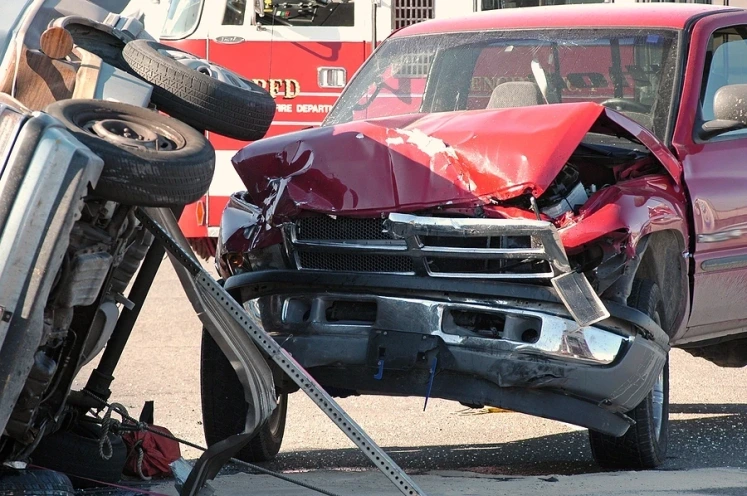
Getting into a car accident is stressful under any circumstances. Discovering that the driver who caused it has no insurance makes an already difficult situation significantly worse. You’re dealing with injuries, vehicle damage, missed work, and medical bills, and the person responsible has no policy to pay for any of it. It feels like a dead end.
It isn’t. South Carolina law provides several avenues for injured drivers to recover compensation even when the at-fault party carries no insurance. Understanding those options clearly, and moving quickly to protect your rights, can make an enormous difference in the outcome of your case.
How Common Is Uninsured Driving in South Carolina
The problem is more widespread than most people realize. South Carolina consistently ranks among the states with higher rates of uninsured drivers. Estimates suggest that roughly one in eight drivers on South Carolina roads is operating without valid liability coverage at any given time. In practical terms, that means every time you get behind the wheel, there is a meaningful statistical chance that someone around you is uninsured.
South Carolina law requires all registered vehicle owners to carry minimum liability coverage of $25,000 per person and $50,000 per accident for bodily injury, along with $25,000 for property damage. Despite that requirement, a significant portion of drivers ignore it, either because they cannot afford premiums or simply choose not to comply. When those drivers cause accidents, the victims are left scrambling.
Your Uninsured Motorist Coverage
The most direct source of compensation available to you after an accident with an uninsured driver is your own uninsured motorist coverage, commonly referred to as UM coverage. South Carolina does not just encourage this coverage. It requires insurers to offer it, and under state law, drivers must affirmatively reject it in writing if they choose not to carry it. As a result, most insured drivers in South Carolina have UM coverage, often without fully realizing how valuable it is.
Uninsured motorist coverage steps into the shoes of the at-fault driver’s nonexistent liability policy. It pays for your medical expenses, lost wages, pain and suffering, and other damages up to your policy limits. If you purchased coverage matching your liability limits, you may have $25,000, $50,000, $100,000, or more available to compensate you for your losses.
There is an important nuance here worth understanding. South Carolina allows what is called stacking of UM coverage if you have multiple vehicles insured under the same policy or separate policies. Stacking means you can combine the UM limits across multiple vehicles or policies to increase your total available coverage. Whether stacking applies in your situation depends on your specific policy language and how your coverage is structured, which is one reason why having an attorney review your insurance documents early in the process is valuable.
Underinsured Motorist Coverage and How It Applies
Uninsured motorist coverage also has a companion, underinsured motorist coverage, or UIM. This applies when the at-fault driver has some insurance but not enough to cover the full extent of your damages. While the at-fault driver in this discussion has no insurance at all, UIM is worth mentioning because the two coverages are typically sold together and work in tandem. If you are uncertain what type of coverage you have, your declarations page will spell it out, and your attorney can help you interpret it.
Filing a Claim Against Your Own Insurer
Filing a UM claim means making a claim against your own insurance company, which feels counterintuitive to many people. You pay your premiums faithfully, and now you are in an adversarial posture with your own insurer. That is, in practice, exactly what can happen.
Insurance companies, including your own, have a financial interest in minimizing what they pay out on claims. They may question the severity of your injuries, argue that certain medical treatment was unnecessary, or dispute the value of your non-economic damages like pain and suffering. They have claims adjusters and attorneys working on their behalf. You should have an attorney working on yours.
South Carolina does impose a duty of good faith on insurers when handling claims. An insurer that acts in bad faith by unreasonably delaying payment, denying a valid claim without justification, or engaging in deceptive practices can face additional liability beyond the policy limits. Documenting your interactions with the insurance company from the beginning protects you if that becomes relevant later.
Suing the At-Fault Driver Directly
Even when a driver has no insurance, you retain the legal right to file a civil lawsuit against them personally. If you win a judgment, the at-fault driver owes you that money regardless of whether they have an insurance policy to cover it.
The practical challenge is collecting on that judgment. A driver without insurance is often also a driver without significant assets or income available to satisfy a court judgment. That does not mean pursuing a lawsuit is pointless. Some uninsured drivers do have wages that can be garnished, property that can be attached, or other assets that could be reached through post-judgment collection efforts. Others may acquire assets in the future, and in South Carolina, judgments can be renewed and remain enforceable for a meaningful period of time.
The decision to sue an uninsured driver directly requires a realistic assessment of their financial situation. An experienced attorney can help you evaluate whether that path is worth pursuing alongside your UM claim or as a standalone strategy.
The Hit-and-Run Scenario
A related situation arises when the at-fault driver does not simply lack insurance but flees the scene entirely. Hit-and-run accidents leave victims without even the driver’s identity, let alone their insurance information.
South Carolina’s uninsured motorist coverage applies in hit-and-run situations as well. However, there is a procedural requirement that matters. To make a UM claim based on a hit-and-run, South Carolina law historically required physical contact between the vehicles. If the fleeing driver never actually made contact with your car, such as in a situation where you swerved to avoid them and crashed, the claim analysis can become more complicated. An attorney familiar with how South Carolina courts have interpreted these provisions can help you navigate that particular issue.
You should also report a hit-and-run to law enforcement as promptly as possible. A police report documenting the incident is important both for your UM claim and for any potential criminal investigation into the fleeing driver.
Steps to Take After an Accident with an Uninsured Driver
The actions you take in the hours and days following the accident shape the strength of any claim you pursue. Call the police and get a report generated at the scene. Seek medical attention promptly, even if your injuries feel minor initially. Some injuries, including concussions and soft tissue damage, take time to fully manifest. Gaps in medical treatment give insurers ammunition to argue your injuries were not serious.
Gather as much information at the scene as you can. Photographs of vehicle damage, the surrounding area, visible injuries, and any skid marks or road hazards are all useful. Collect contact information from any witnesses. Note the other driver’s name, address, and vehicle information even if they have no insurance card to provide.
Notify your own insurance company of the accident. Most policies require prompt notification of any incident that might give rise to a claim. Failing to report in a timely manner can complicate your ability to use your UM coverage later.
Why Legal Representation Matters Here
Uninsured motorist claims are not simple. They involve interpreting policy language, negotiating with insurers who are motivated to pay as little as possible, and in some cases litigating against your own insurance company. The compensation you recover may be the only compensation available to you for injuries that could affect your life for months or years.
Working with a personal injury attorney who handles uninsured motorist cases in South Carolina gives you the best chance of recovering what you are actually owed. Most personal injury attorneys handle these cases on a contingency fee basis, meaning you pay nothing unless and until your case resolves in your favor. If you were injured by an uninsured driver, consulting with an attorney costs you nothing and could change your outcome significantly.